 |
 |
WONDERS OF INDIA Brought to you by Touristplacesinindia.com |
|
|
Since the ancient ages, India has been known all over the world for its numerous wonders. The Indian sub continent has been the cradle for some of the oldest civilizations of the world.
Over a period of thousands of years, India has developed into one of the most fascinating countries of the world. The wonders of India include breathtaking natural beauty, its rich wildlife, the varied and dynamic population, and the numerous historic buildings that have been built by the erstwhile rulers of this vast land. Tourism in India has been ever growing due to the immense popularity of the wonders of India all over the world.
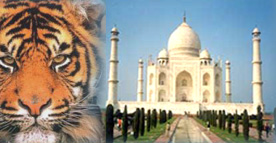
Seven Wonders of IndiaThe seven wonders of India are the best that you can check out on a vacation to the nation. While Taj Mahal is among the Seven Wonders of the World, others are worth checking out as well. All the monuments are known for their architectural beauty, unique designs and the kind of artistic skills on display, which existed during those days. �The seven most desirable attractions to explore in India are:Taj Mahal - The crowning glory of India is the magnificent Taj Mahal. The white marbled monument is located in the famous city of Agra. It was an initiative by the Mughal Emperor Shah Jahan. As the story goes, the emperor built this structure in living memory of his deceased wife Mumtaz Mahal. It�s the finest example of Mughal architecture and style, which used Turkish, Persian and Indian architectural designs in the monument. The monument became a UNESCO World Heritage Site in the year 1983. The white domed beauty�is admired by every tourist who visits this marvelous attraction.The monument is placed around a garden, which is known as the Mughal garden or the Charbagh. The construction of this amazing monument began in the year 1632. Khajuraho - Another wonderful attraction to check out is the Khajuraho temples. These come under the Khajuraho Group of Monuments. The temples are located at Chhatarpur district, Madhya Pradesh.� The Khajuraho group mainly consists of Jain temples and Hindu temples. Built out of sandstone, the temples are famous for their carvings, which are delicately designed to depict different forms of love. The sculpture found in the temples symbolizes the artistic skills of that era. Popularly known as the temple town of Khajuraho,� this well known tourist spot has been getting attention not only from the historians worldwide but also travel enthusiasts who love to know about ancient India.� Khajuraho is also famous as a religious destination because of its various significant temples dedicated to Hinduism and Jainism. The temples belong to the 10th-11th century and have a connection to the Chandela dynasty. The temples of Khajuraho and their significant erotic figurines on the walls carry an ancient legend, which is still spoken of. As per the legend, Moon God seduced a Brahmin lady called Hemvati who gave birth to the founder of Chandela dynasty. It was on the lady�s request to her son that the temples with erotic figurines were built. Ajanta Ellora - Giving a glimpse of the ancient Indian architecture, Ajanta Ellora caves are one of the must see attractions in India. The caves are placed near Aurangabad in the state of Maharashtra. The cave shrines are man made and built out of rock. There are about 29 caves in Ajanta and 34 caves in Ellora. The caves were undiscovered until the year 1819 when Sir John Smith found these during an expedition. Ajanta Ellora caves are national pride and have been declared as World Heritage Sites in India. These caves depict the stories of the Jatakas from the faith of Buddhism. There are cave temples in Ellora, which are dedicated to Hindu, Jain and Buddhism faith. These caves functioned as Monastery halls or Viharas for the Buddhist monks in those days. Cave temples like the Kailasha temple is a wonder in itself with architectural designs� carved out of a single rock. Golden Temple - Golden Temple, as it is popularly known, is Shri Harmandir Sahib or Sri Darbar Sahib. It is a pious shrine for Sikhs all over the worldand is situated in Amritsar in Punjab. The construction of this religious site began in 1588. It came up as an initiative of the third Sikh Guru and the fifth Sikh Gurus Amardas Sahib and Guru Arjan Sahib. The foundation was laid at the site by Hazrat Mian Mir Ji in December 1588. The temple is built around an area of 67 ft. �It occupies about 40.5ft square and is a three storied monument with doors in East, West, North and South. The design of the domes and pillars signifies a blend of Islamic and Hindu styles of architecture and art. This further represents the harmony among Muslims and Hindus in those days. The whole monument is golden in color, which is the reason behind its name. Mahabodhi Temple - Bodh Gaya: Mahabodhi Temple is one of the most ancient attractions that India can boast of. The temple is constructed in brick and is still one of the most visited monuments in India. It shelters a Buddha monument showing the lord touching the earth with his right hand. The temple has courtyards with stupas. These stupas have statues of Lord Buddha, some of which are as old as hundred years and more. The Mahabodhi Temple lies next to the famous Bodhi Tree. This is where Lord Buddha was enlightened. The place also has the Jewel Walk. This is the holy path where Lord Buddha practiced walking meditation. There are several other sites of significance at Bodh Gaya, which are worth visiting near the Mahabodhi Temple. Some of these include the 80 foot Buddha statue, Japanese Temple and Bodhgaya Multimedia Institute. Hampi - Also known as Hampe or Humpi, the site is of religious as well as historic importance. Hampi was the capital of Vijaynagar Dynasty, which ruled over a large part of Southern India from 14th till 16th century AD. The location is a wonder in its own way as it is filed with market places, artistic temples, palaces, aquatic areas and fortifications. Hampi is located inKarnataka. Some of the must see attractions at Hampi are Royal Enclosure, Vittala Temple, Sasivekalu Ganesha, Hemakuta Hill, Virupaksha Temple, Lotus Mahal, Lakshmi Narasimha, Matanga Hill, Hazara Rama Temple, Anjaneya Hill and Temple, Elephant Stables and Pattabhirama Temple. The art and architectural works at Hampi give a glimpse of the creative styles used in those days. With all the above attractions and lot more, Hampi ranks high as a World Heritage Site in India. Konark-Sun Temple - Another wonder to visit in India is the beautiful Konark Sun Temple in Orissa. Built under the rule of King Narsimhadeva who ruled the Eastern Ganga Dynasty from the year 1238 till 1250, the temple is a beauty to visit. It�s a World Heritage Site and one of the most famous temples in the country. The architectural designs used in the structure and walls of the temple depict the styles� prevalent in the Chola Dynasty and Ganga Dynasty. Located at about 3 kilometers away from the sea, the temple has a unique structure of that of a chariot of the Sun God. The monument shows a huge chariot of the God being drawn by his seven horses. The wheels of the chariot are worth noticing with delicate works on stone. Other notable features include the giant lions at the entrance and the Nata Mandir or Temple. Konark-Sun Temple is thus one of the best monuments to be checked out during a visit and indeed one of the best wonders of India. All the seven wonders of India are sure to make you fall in love with them. Every work of art and architecture that you find here are worth talking about and marvelous.
|