
Pilgrimage.Touristplacesinindia.com offers Pilgrimage Tours, Travel, Tourism, and Tour Packages for pilgrims of all religions. Get all the travel information and Travel services for Hindu Pilgrimages in India, Buddhist Pilgrimages in India, Sikh Pilgrimages in India, Christian Pilgrimages in India, and Jain Pilgrimages in India. Travel to the Holy Spots of India and get to know the most spiritual nation in the world
Contact Us | Home
Sikh Pilgrimages in India
SIKHISM - AN INTRODUCTION

Sikh pilgrimage sites combine the best of both the spiritual and the human world-prayers with a sense of brotherhood and fellowship.
Brave, strong and extremely warm-hearted-these are the traits of a typical Sikh. However, there are other aspects to them, which are equally attractive-their strong sense of community and their adherence to their faith. The symbols such as the five Ks-kesha (the ban on cutting hair), kada (an iron bangle), kanga (a small comb), kirpan (a small dagger) and kachha (underwear) serve to accentuate their distinct identity. The Sikh religion is remarkable for the absence of complicated rituals and for its emphasis on simple living and practicality. Not for the Sikhs, the excessive austerity of those who renounce life, rather a celebration of life in keeping with the Guru's teachings of service and social integration.
After Nanak, a succession of Sikh gurus further established the presence of Sikhism in Punjab. Though the early Gurus stayed away from politics, Guru Arjun Dev, the fifth Guru who compiled the Adi Granth, became involved in the politics of the day and supported the rebel Mughal Prince Khusro. Emperor Jahangir, resentful of the Guru's growing influence, imprisoned him and tortured him to death. This was the beginning of Sikh hostility to the Mughal Empire, a hostility that culminated in several battles and led to the gradual transformation of the Sikhs into a warrior community. Worship for Sikhs became and still is a way of life, expressed best in the adherence to their Gurus teachings and to the five Ks. As a natural corollary, the pilgrimage site for the Sikhs are places associated with the various Gurus.
Golden Temple
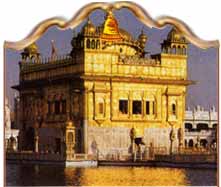 A pilgrimage to the Golden Temple is a must for any Sikh. This is the most sacred shrine of the Sikhs and is in the town of Amritsar founded by Guru Ram Das, the fourth Sikh Guru. The temple was built by Guru Arjun Dev and the great Sikh ruler Ranjit Singh embellished the shrine and covered the domes with gold. The temple is in the middle of the holy tank called the Pool of Immortality dug up by Guru Ram Das. The temple is a pleasing square building in marble with inlaid walls and a domed roof. The holy book of the Sikhs the Guru Granth Sahib is kept under a Sikh canopy and pilgrims file past it. A few yards away from the temple is the Akal Takht (The Immortal Throne) from where the Gurus held court. This is a building of immense historical significance for Sikhs and is the place where decisions concerning the religious and social life of the community are taken. At any given day, the Golden Temple is full of devotees yet there is a great air of tranquility and peacefulness.
Anandpur Sahib
Another important pilgrimage site is Anandpur Sahib, where Guru Gobind Singh, the tenth Guru created the 'Khalsa' or the pure ones by baptizing them. Anandpur Sahib (in Ropar District) is one of the five Sikh takhts or thrones. Sikhs from all over India visit this holy site especially on the occasion of Holla Mohalla which coincides with the last day of Holi and marks the festival's finale. On this day, the Gurudwara Keshgarh is filled with people and colour as men in bright turbans and women in gaily-colored salwar kameezs try to live up to Guru Gobind Singh Ji's vision of Holi.
Damdama Sahib
Damdama Sahib or Talwandi Sabo in Bhatinda district holds great significance for Sikh for it is the place where the guru sought rest and refuge during his battles with the Mughals. During the Baisakhi festival (from 13th to 15th of April), a major fair is held at Damdama Sahib and Sikh pilgrims from all over the world congregate here to pay homage to Guru Gobind Singhji. The fair at Damdama Sahib dates back to about 250 years and coincides with the Rabi, harvesting festival. Thus, it is a time for great joy and celebration and also a time to remember allegiance to the Sikh faith. Guru Gobind Singhji stayed in Damdama Sahib for nine months and it was here that he worked on the Adi Granth.
He made Damdama the center for propagating the Sikh faith and called it 'Khalsa De Takht' or Throne of the Khalsa. He had a special stamp issued bearing the inscription 'Amal Sahai, Guru Gobind Singh Ji Ki Jagha takhat Damdama ji' clearly demonstrating the importance of the place. This stamp was used on all the important documents issued by the Guru from Damdama Sahib.
Fatehgarh Sahib, Sirhind
Sirhind's Fatehgarh Sahib Gurudwara is yet another important destination for Sikh pilgrims. This gurudwara has been built on the site where 300 years ago, Guru Gobind Singhji's two young sons were entombed alive by the Mughals. Sikhs congregate here to remember their martyrdom and to pay homage to them and to their Guru. In December, during the annual Jor Mela, thousands of people gather here in remembrance and the Gurudwara resounds with celebration and devotion. Recitations of hymns mingle with the beats of the lilting folk songs and there are performances of Punjab's boisterous dance like the Bhangra and the Gidda. In the Guru Ke Langar, sevaks help to feed the devotees with free food. Stalls selling handicrafts, jewellery, traditional weapons, costumes and regional fare are set up.
Gurudwara Hemkund Sahib
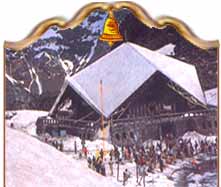 Not all pilgrim sites for Sikhs are in Punjab. In Uttaranchal's Garhwal region is the Gurudwara Hemkund Sahib. There is an interesting story behind this pilgrim site-it is believed that before his birth, Guru Gobind Singhji was performing tapasya (meditation) here. Thereafter, he was born on earth in order to rescue people from the tyranny of Aurangzeb, especially from his overzealous attempts to convert people it Islam. In one of his writings, Guru Gobind Singh described the locale around Hemkund Sahib. An army havildar who had read this description undertook the arduous journey to locate the place and was successful in his endeavor. A small Gurudwara was built at the spot and over the years, a large Gurudwara has been established here. A pilgrimage to Hemkund Sahib is dependent on the season as the route is closed due to heavy snowfall during the winter. The route is usually open between June and October and despite the danger of landslides, it is not unusual to find busloads of Sikhs from all over the country heading for Hemkund Sahib.
Gurudwara Patna Sahib (Har Mandir)
In Patna, Bihar is the Gurudwara Patna Sahib or the Har Mandir where Guru Gobind Singhji was born. Today, it is one of the most important pilgrimage centers for Sikhs and at least once in their lifetime, they try to visit this holy place.
Pilgrimage Centers in Delhi
In Delhi, the Gurudwara Sisganj, the Bangla Sahib Gurudwara, and the Rakabganj Gurudwara are popular pilgrimage sites. The Gurudwara Sisganj marks the spot where guru Teg Bahadur was beheaded. It is said that during Aurangzeb's rule, the priests held special ceremonies to find ways to combat his forced conversions to Islam. It was prophesied that these conversions would stop only when a great man sacrificed himself. The priests then approached Guru Teg Bahadur who asked about the identity of this great man. His son Guru Gobind Singhji then retorted 'Who can be greater than you, Father?' So then Guru Teg Bahadur went to meet Aurangzeb. Offered a choice between death and conversion by Aurangzeb, the Guru chose death. Thus he gave up his head but did not give up his faith.
At all the Sikh pilgrimage sites, the most palpable feelings are the strong sense of community and service. In fact, one of the biggest features of this religion is the community building of the gurudwara wherein each Sikh offers his labor, skill or any other contribution he can make in terms of finance or material.
|